UK:
UK:  USA:
USA:





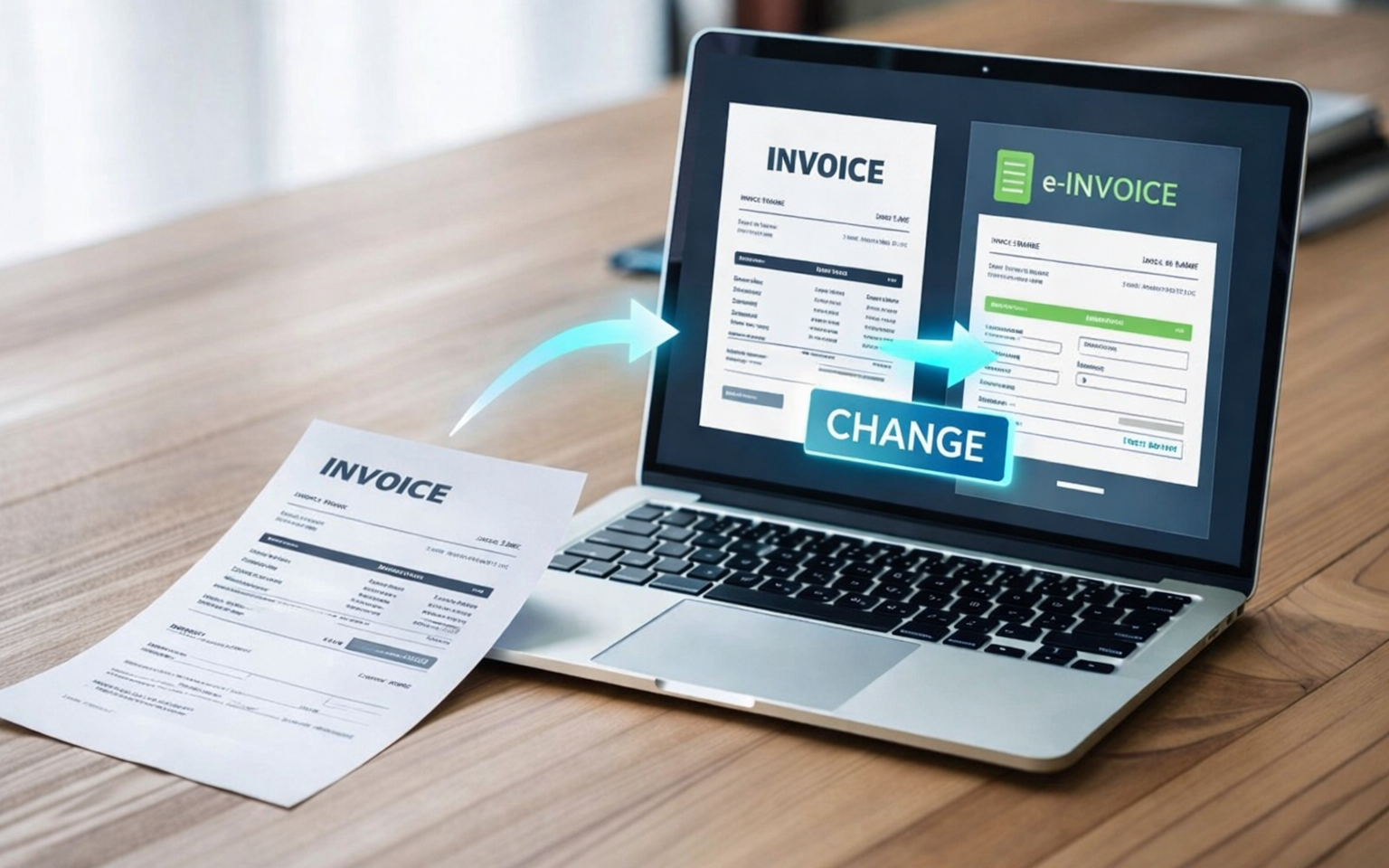
In an era where digital transformation is reshaping business processes across industries, the European Union’s VAT in the Digital Age (ViDAViDA or 'VAT in the Digital Age', is an EU initiative proposed by the European Commission that seeks to modernise and harmonise VAT processes for member states, by embracing new technologies. It is aimed at updating processes for the management of VAT, and reduce the VAT gap and fraud. The proposal also aims to address challenges in the area of VAT raised by the development of the platform economy.) directive is set to trigger one of the biggest shifts in invoice processing practices since the introduction of electronic invoicing.
Although this shift does not come as a surprise. Across Europe and globally, countries introducing mandatory e-invoicingElectronic invoicing - widely referred to as e-invoicing - is the exchange of a digital document between a supplier and a buyer. E-invoices are issued, transmitted and received in a structured data format that enabled automatic and electronic processing. They contain data in a machine-readable format so that an AP system can read an invoice without manual data entry, leading to faster and more efficient invoicing. regimes have generally required invoices to be issued in structured, machine-readable formats. The move away from PDFs has long been anticipated.
Yet under VIDA, this evolution takes on new legal weight. The directive changes the very definition of an “electronic invoice” under EU VAT law, formally recognising only structured formats capable of automated processing.
A new definition
Under the existing VAT Directive, an electronic invoice was broadly defined as any invoice that is issued and received in an electronic format – including unstructured PDFs or scanned documents. This flexible approach allowed businesses to treat even simple PDFs sent by email as valid invoices.
However, ViDA rewrites this definition. The new regime requires invoices to be:
-
Issued, transmitted and received in a structured electronic format (such as XMLExtensible Markup Language is a markup language and file format for storing, transmitting, and reconstructing arbitrary data., EDI, or hybrid structured formats like Factur-X),
-
In a format that facilitates automatic and electronic processing.
It means that common PDF invoices – even those archived digitally – may no longer qualify as valid electronic invoices once ViDA’s requirements are fully in force.
No more recipient acceptance
Another key change introduced by ViDA relates to recipient acceptance. Previously, businesses had the right to accept or reject electronic invoices, and suppliers often relied on this flexibility.
Under the new system, recipient consent is no longer required for structured electronic invoices within the scope of ViDA’s Digital Reporting Requirements. In practice, this means suppliers can issue bona fide structured e-invoices and customers are legally obliged to accept them as received – even if they still use older internal accounting processes.
This removes a traditional safeguard for companies, but also accelerates the legal effectiveness of e-invoices, making structured formats a de-facto standard for compliance.
The “Prefilling” challenge
Possibly the most disruptive consequence of ViDA is the emergence of what practitioners are calling the “prefilling headache.”
Under ViDA’s digital reporting model, structured e-invoices are reported to tax authorities as soon as they are issued, and those authorities may pre-populate (“prefill”) tax returns and compliance dashboards with that data.
That’s powerful for tax administration efficiency but it also exposes a major disconnect between the speed of electronic reporting and the slower cadence of traditional internal invoice processing.
In many firms, invoices are “parked” meaning they are received electronically but not yet booked, validated or approved in internal accounting systems. They may sit idle for days or even weeks before moving through approval, booking and payment stages.
ViDA’s instant reporting means that tax authorities might see and act on an invoice long before a company’s books do. This creates:
- Discrepancies between tax filings and internal accounts
- Potential audit triggers
- Pressure on finance teams to reconcile mismatched data quickly
- And ultimately, a need to reengineer accounts payable processes from end to end
A phased but inevitable transition
ViDA is not being rolled out overnight. While the directive was formally adopted and published in 2025, full compliance deadlines stretch through 2030 and beyond, including the mandatory use of structured e-invoices for cross-border B2B transactions by July 2030.
Yet the direction of travel is clear: digital reporting, structured data flows and automated compliance are not optional. Businesses that wait risk scrambling for compliance later, at potentially much higher cost.
What teams should do now
Given the scale of change ViDA represents, organisations should start taking action today:
- Assess your invoicing formats – identify current reliance on unstructured PDFs
- Evaluate readiness
- Invest in strucutred e-invoicing capability – move toward EN 16931 compliant formats an =d systems capable of automated processing
- Engage specialist support where needed – preparing for ViDA often requires cross-functional coordination between tax, finance, IT and procurement.
Innovate Tax can support organisations through:
-
Readiness workshops and impact assessments
-
Vendor evaluation and selection
-
End-to-end implementation services
Early engagement can reduce costly rework, mitigate compliance risk and ensure technology investments align with long-term EU digital reporting requirements.
Conclusion
While this may feel incremental in countries that already mandate structured invoicing, it is a significant shift for Member States that still accept unstructured PDFs and for businesses that continue to operate in hybrid processing environments.
By embedding structured e-invoicing directly into EU VAT legislation, ViDA removes ambiguity and accelerates harmonisation. What was previously a national policy trend now becomes a legally defined EU standard – with far-reaching consequences for invoice processing, compliance timelines and internal finance operations.